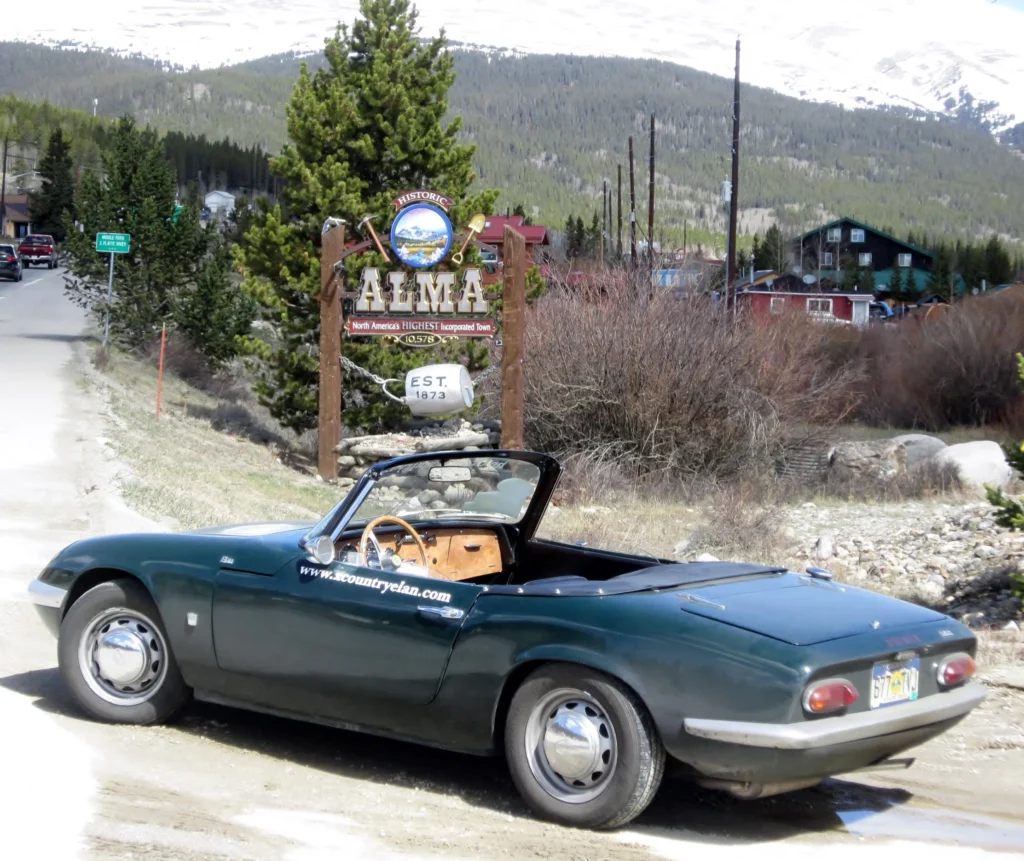
In the modern world of travel, we are often obsessed with the “fastest route.” Our GPS devices are programmed to shave off minutes, bypassing the winding secondary roads in favor of the sterile, high-speed efficiency of the interstate. But in the United States, if you only stick to the highways, you are only reading the table of contents of a very long and complex book. The real story—the ink, the sweat, and the soul of the country—is found when you take the exit you didn’t plan on taking.
Traveling through America is most rewarding when it is lived in the “slow lane.” It is a country designed for the wanderer, the person who is willing to pull over because a hand-painted sign promised the best cherry pie in the county or because the way the fog settled over a valley in Vermont was too beautiful to ignore.
The Architecture of Community
One of the most striking things about American travel is the “Main Street” phenomenon. Whether you are in a dusty town in West Texas or a coastal village in Maryland, the layout of the American small town is a blueprint of its history. You find the brick courthouse in the center, the hardware store that has been there for three generations, and the local theater with its fading marquee.
These towns are the heartbeat of the nation. To walk through a place like Galena, Illinois, or Jim Thorpe, Pennsylvania, is to see how the landscape shaped the people. In these communities, the pace of life isn’t dictated by an algorithm; it’s dictated by the seasons and the neighbors. For a traveler, these stops offer a chance to breathe. There is a specific kind of peace found in sitting on a park bench in a town where people still wave to passing cars, reminding us that despite our digital silos, human connection is still the primary currency.
The High Altitude Spirit
If the small towns are the heartbeat, the Rocky Mountains are the spine. Traveling through Colorado, Wyoming, and Montana offers a different kind of American character: the mountain spirit. Here, the air is thinner, the winters are longer, and the people have a rugged, quiet independence.
Towns like Bozeman or Durango aren’t just gateways to ski resorts; they are hubs of a culture that prioritizes the outdoors above all else. In the Rockies, a “good day” isn’t measured by what you bought, but by how many vertical feet you climbed or the clarity of the trout stream you fished. For the traveler, this region offers a literal and figurative “peak” experience—a chance to stand on the Continental Divide and realize that the water beneath your boots is headed for two different oceans.
The Delta and the Bayou: A Waterborne History
Heading south toward the Gulf Coast, the geography turns liquid. The Mississippi Delta and the Louisiana bayous represent one of the most culturally dense regions in the world. This is a landscape where the land and water are constantly negotiating for space.
Traveling through the “Cajun Country” of Acadiana is a sensory overload. The Spanish moss hangs heavy from ancient cypress trees, and the air carries the scent of woodsmoke and cayenne. The culture here is a defiant, beautiful blend of French, African, and Indigenous influences. To attend a Saturday morning “Zydeco breakfast” in a small Louisiana town—where accordion music fills the air before 10:00 AM—is to witness a joy that is entirely infectious. It is a reminder that American culture isn’t a monolith; it is a spicy, simmering gumbo of everything that came before.
The Rust Belt’s New Morning
There is a profound beauty in the “Rust Belt” that many travelers overlook. Cities like Pittsburgh, Detroit, and Cleveland are currently undergoing a fascinating cultural renaissance. These were the cities that built the twentieth century, and while the factories may have cooled, the creative energy has not.
Traveling through these cities today, you find old warehouses transformed into world-class art galleries and abandoned industrial sites turned into lush urban parks. There is a “no-nonsense” honesty to the Midwest; people here don’t put on airs. They are proud of their history of making things, and that pride is visible in the local craft breweries, the artisan workshops, and the fierce loyalty to local sports teams. It is a region that teaches a traveler about resilience and the art of the “comeback.”
The Desert Neon and Dust
Then there is the Southwest, a region that feels like a fever dream of red rock and neon. Beyond the grand hotels of Las Vegas lies the “Real Nevada”—a land of ghost towns, silver mines, and the loneliest roads in America.
Driving through the Mojave or the Sonoran desert at night is a transformative experience. Without the light pollution of the cities, the sky becomes a crowded canopy of stars that feels close enough to touch. The desert is a place of extremes, and the people who live there—artists, ranchers, and hermits—reflect that edge. It is a place that invites introspection. You don’t just “visit” the desert; you absorb it.
The Language of the Diner
No article on American travel is complete without mentioning the diner. The American diner is the ultimate social equalizer. It is the one place where a billionaire in a suit and a long-haul trucker in flannel can sit at the same counter and eat the same hash browns.
The diner is the traveler’s sanctuary. It is where you go to look at the map, to overhear the local gossip, and to get a sense of the town’s temperature. Each region has its own version: the “meat and three” in the South, the “coney island” in Michigan, or the “green chile burger” joints in New Mexico. These are the cathedrals of the road, and the service usually comes with a side of local wisdom if you’re willing to listen.
Conclusion: The Tapestry of the Trail
The United States is often criticized for its “sameness”—the sprawling suburbs and the identical shopping malls. But that is only the surface. If you are willing to turn the steering wheel toward the unknown, you will find a country that is staggeringly diverse, intensely local, and surprisingly kind.
Travel in the U.S. is about realizing that every “Archive” title on a map holds a story worth reading. It’s about the 180°C heat of a summer day in the desert and the 10% grade of a mountain pass that makes your heart race. It is a journey that doesn’t require a passport, yet it can take you through a thousand different worlds.
The American road isn’t just a way to get from Point A to Point B. It is a living, breathing entity that connects the past to the future. So, next time you see a sign for a “Scenic Lookout” or a “Historic Byway,” take the turn. The interstate will still be there later, but the magic of the detour is fleeting.